بسم اللہ الرحمن الرحیم
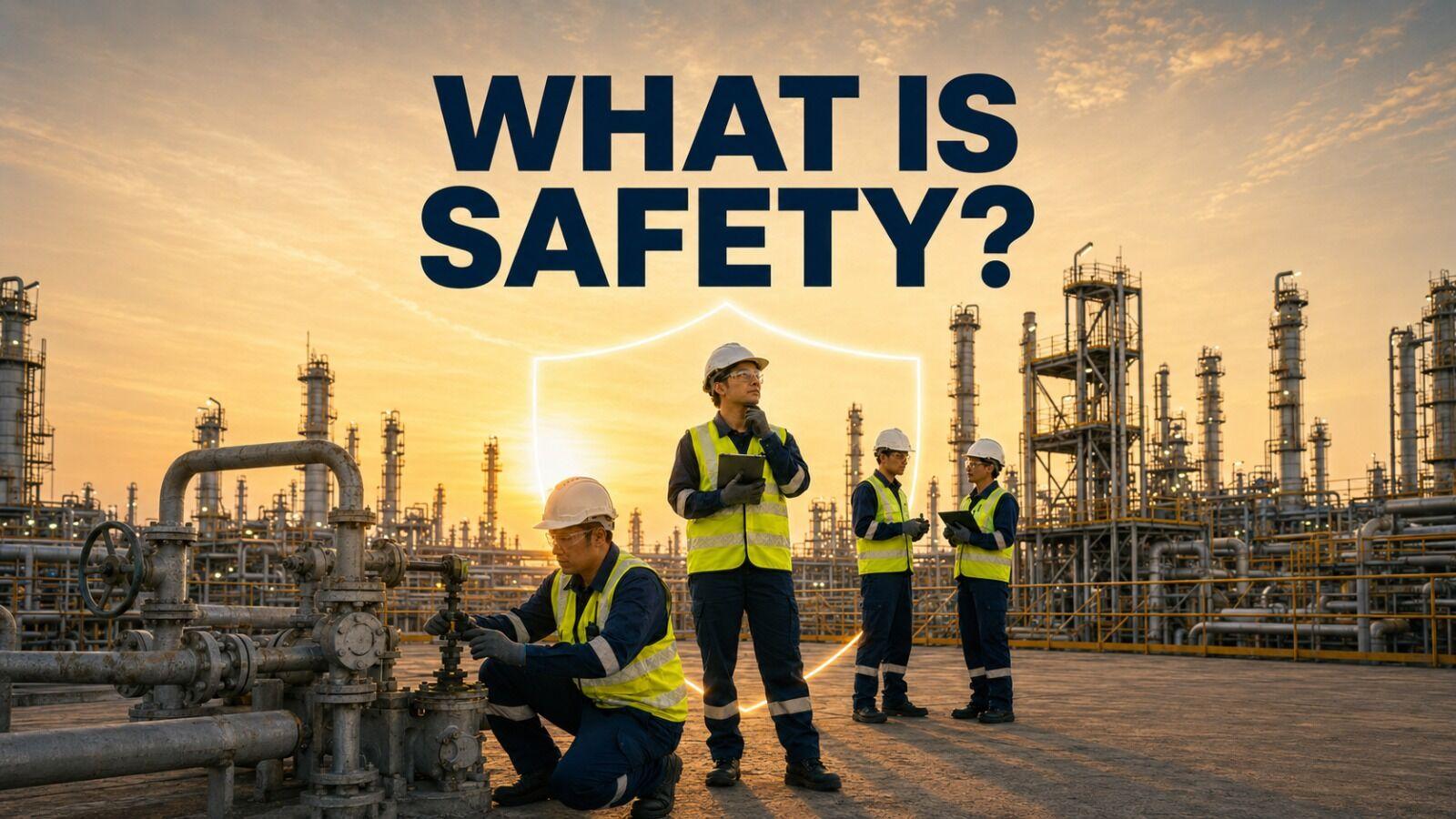
What is Safety?
It is a very simple question, but it cannot be answered simply. However, the fundamental answer is that "Safety is an Ethic."
How is it an ethic, or why is it an ethic? Whenever it comes to implementation, verification, demonstration, or execution, it ultimately comes down to an individual's choice. No economic, social, or legal requirement can ensure proper implementation unless the individual has a positive attitude towards safety. This positive attitude is ethics - where we do not merely pretend to comply, but actually fulfil our safety responsibilities.
Let us consider an example. Imagine ourselves as a field inspector who has to verify the condition of equipment. Instead of being physically present and conducting the inspection properly, if I simply sign the inspection record without thoroughly inspecting the equipment, what have I done?
Yes, requirement to have inspection and maintain record is achieved, but is it actually Safe? No, I have compromised my ethics. In doing so, I have created an unsafe condition, putting someone at risk, and compromised their safety.
Now consider another example. When I am working on the shop floor and perform an unsafe act while no one is supervising me, or when the supervisor has momentarily shifted their attention, I take advantage of the opportunity, bypass the procedure, and complete the task quickly. What have I done? Yes, you are right - I have compromised my own safety, the safety of those around me, and possibly the quality of the work, which may later lead to a safety incident. Remember, just completing a task without an incident does not mean it was or is safe, significant and unnecessary risk accompanies the activities in such cases.
Specifically, for individuals who are responsible for implementing and verifying safety requirements, maintaining professional - and indeed personal, ethics is essential and matters greatly.
Different studies suggest that majority of incidents involve some form of individual factor. This includes human errors, lack of knowledge, or insufficient awareness; however, a major contributor is intentional ignorance, such as bypassing or overriding established procedures. Although incidents are not investigated using a blame approach, nor for the purpose of blaming individuals, investigations are conducted to identify root causes and prevent recurrence, but root causes are to be accurately and fairly identified.
When we say an individual's mistake or ignorance contributed to an incident, it may refer to the triggering event. For example, an inexperienced operator may be operating equipment in a critical area – results in an serious incident. However, it may also involve the individual who accepted or authorized that operator to perform the task despite limited experience.
In this regard, although the operator may be the immediate trigger of the incident, a fist hand contribution come from someone who was not directly involved in the event, but have accepted the operator while being aware of his competency level and criticality of his operation in the area.
Throughout industrial history, many incidents have been traced back to individuals' ignorance or failure to fulfil their responsibilities. In modern safety science, a more balanced and scientific approach often attributes responsibility to the "system"—in other words, the organization. However, this does not contradict the reality that an organization's culture and safety climate are ultimately created and sustained by individuals.
The next time you have to make a decision or implement something, do not forget that your decision will affect others. That impact may be negative, and in one way or another, you will be accountable for it. After all, wherever there are responsibilities, there are also accountabilities.